
The Johannesburg Stock Exchange (JSE) closed the quarter at a record high of 128,455 points, driven largely by a resurgent resource sector. Gold and silver prices reached new peaks, reinforcing South Africa’s position as a resource‑rich emerging market. International investors, attracted by higher yields and buoyed by South Africa’s removal from the FATF grey list, increased their exposure. This, combined with broad‑based optimism about the domestic economy, helped keep the Rand relatively stable.
Finance Minister Enoch Godongwana presented a more inclusive and consultative budget than in previous years, reflecting the realities of the Government of National Unity (GNU), where the ANC can no longer ignore smaller coalition partners.
Encouragingly, the GNU has begun relaxing some of the more restrictive labour laws, particularly onerous employment requirements, signaling a shift toward a more moderate business environment aimed at fostering growth.
The ongoing foot-and-mouth disease (FMD) crisis in South Africa is of concern given that estimated losses within the agricultural sector in the beef industry alone are ranging from R3.2 billion to over R13 billion. The outbreak, affecting eight of the nine provinces, has resulted in a 26% decline in beef exports and significant disruptions to the R80 billion livestock sector.
In the United States, President Donald Trump continues to govern primarily through social media, adopting a prescriptive style that has strained relations with some of America’s oldest allies through ongoing trade disputes. This has deepened global polarization, raising concerns about potential escalation into broader conflict, particularly given the recent US capture of Venezuela’s President, Nicolas Maduro, along with the US and Israel’s offensive in Iran.
US corporate earnings show resilience, though the technology sector remains priced for perfection. Any earnings miss relative to analyst expectations could trigger volatility, given the market’s high concentration in a handful of large companies. Meanwhile, the US dollar weakened during the review period, and concerns are mounting over ballooning federal debt levels.
Below is an indication of how the Global Bourses have fared over the last few quarters: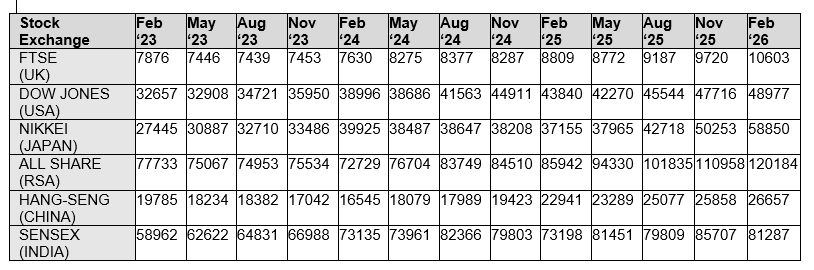
The below graph tracks the performance of the Rand against the US Dollar over a seven-year period: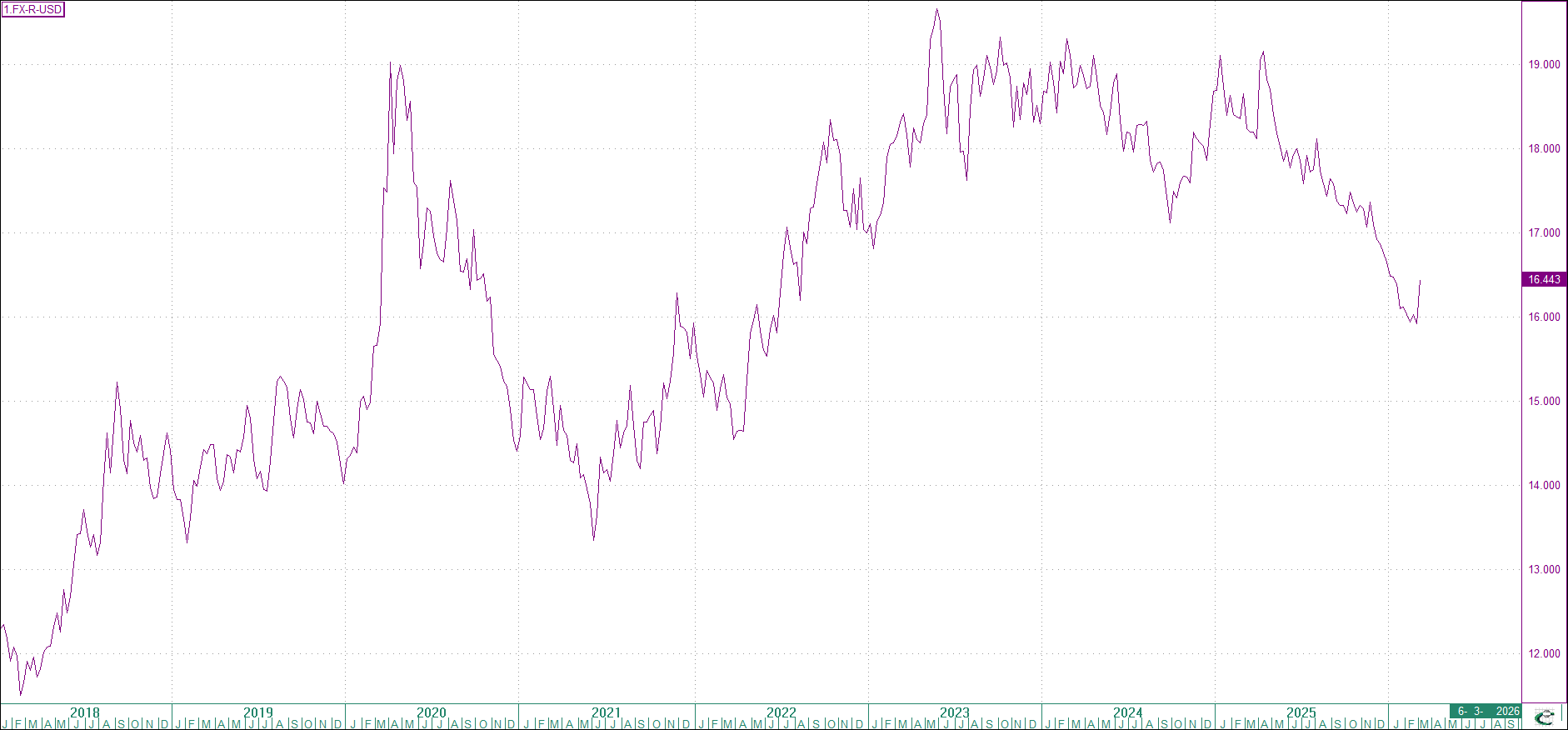
The below graph tracks the performance of the JSE All Share Index over a seven-year period: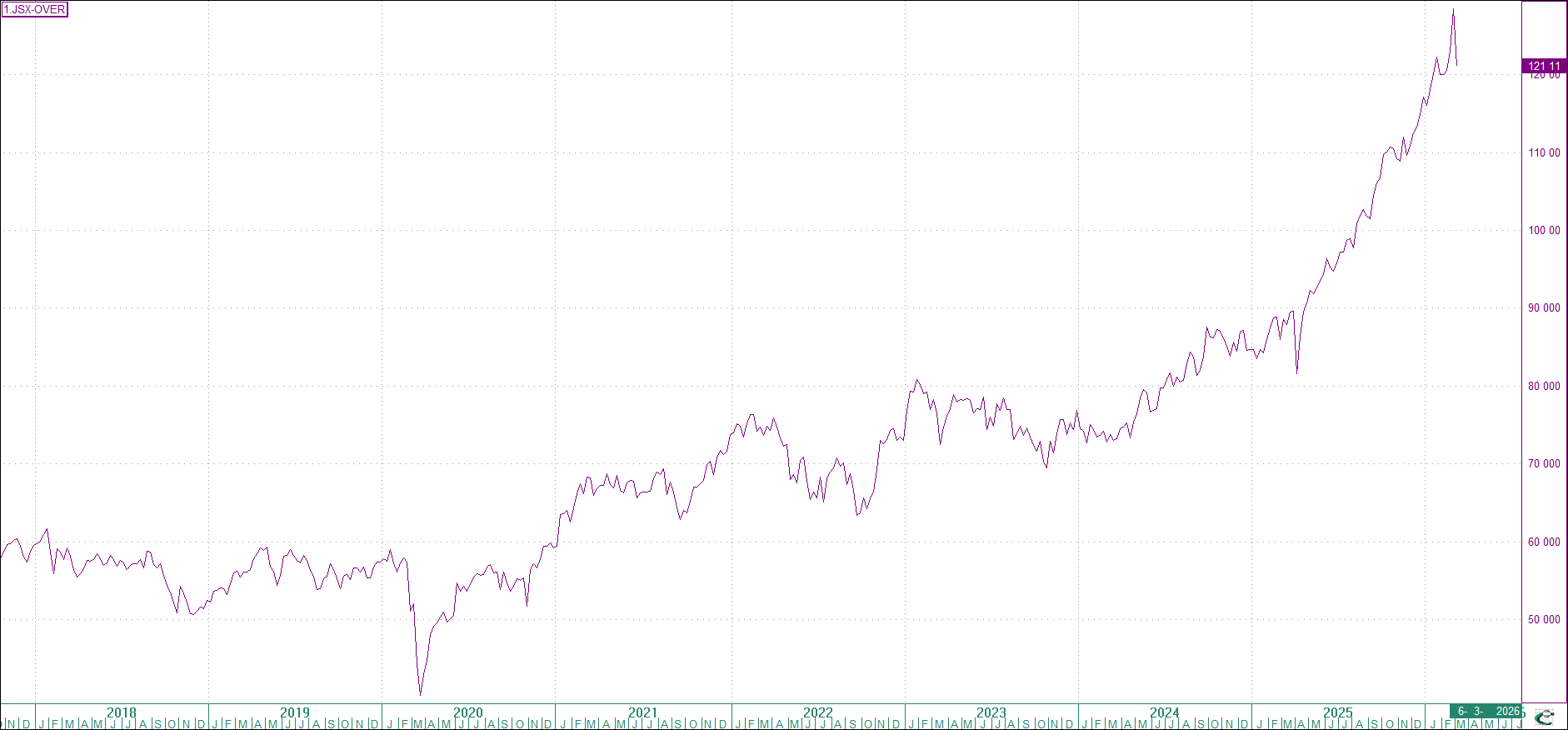
The ongoing conflict in Iran is reverberating across global markets, and South Africa is feeling the strain. Rising oil prices have translated into higher fuel and transport costs, which in turn are pushing up food prices and general inflation. The weaker Rand has amplified these pressures, making imports more expensive and eroding household purchasing power. For the Reserve Bank, this environment complicates monetary policy, with the likelihood of interest rate cuts being delayed as inflation risks remain elevated. For consumers and businesses alike, the immediate reality is tighter budgets and slower growth prospects.
Importantly, the war began just two days before the close of South Africa’s February quarter and financial year-end, adding further uncertainty to fiscal planning and investor sentiment at a critical reporting period.
Yet, amid these challenges, there are opportunities worth noting. South Africa’s gold sector and platinum group metals (PGMs) is benefiting from increased global demand for safe-haven assets, offering a valuable cushion against broader economic pressures. Agricultural exporters may also find new markets as global food prices rise, while the country’s ports could gain strategic importance as alternative trade routes are sought. Longer term, the crisis underscores the importance of diversifying energy sources, and South Africa is well-positioned to attract investment in renewable energy projects. For investors, this moment calls for caution but also a keen eye on sectors—such as mining, agriculture, logistics, and renewables—that could thrive in a shifting global landscape.
South Africa’s combination of resource strength, fiscal pragmatism, and regulatory moderation is creating a more attractive environment for investment. Globally, however, risks remain elevated due to geopolitical tensions, concentrated equity markets, and unsustainable debt trajectories. Investors should balance optimism with caution in the months ahead.